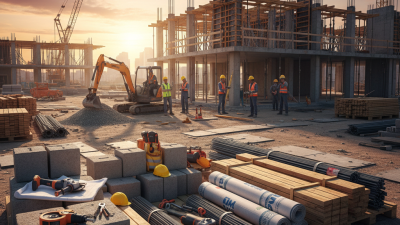
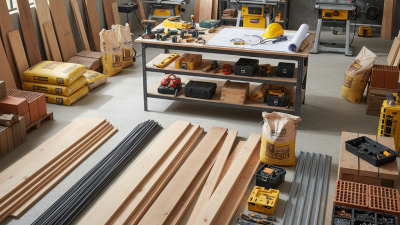
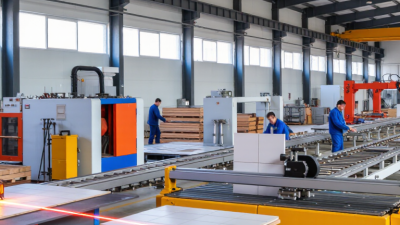
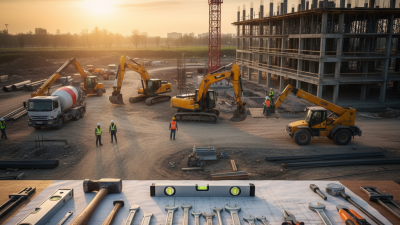
Why Choose Building Materials Tools for Global Projects?

Global construction projects demand more than quality materials. They require reliable building materials tools that perform across climates, jobsite conditions, and professional standards. A laser level must remain accurate in humid heat. A diamond blade must cut dense concrete without excessive vibration. A moisture meter can prevent hidden damage before wall panels are installed.

Canadian contractor and construction educator Mike Holmes has a practical message: “Do it right the first time.” His principle fits international work especially well. The correct building materials tools can reduce rework, protect workers, and support consistent results across distant teams. They also help contractors document quality through measurements, calibrated settings, and repeatable procedures.

Performance matters. So does availability. A global supplier should offer clear specifications, replacement parts, training, and responsive technical support. Tools should suit local power systems, transport limits, and site safety requirements. Small details matter, such as a sealed case surviving a dusty flight or a spare battery arriving before a concrete pour.

Yet no tool guarantees perfect construction. Mistakes still happen. A rushed operator may misuse an excellent saw. A poorly checked level can distort an entire façade. This is where experience becomes essential. Project managers must compare tool ratings, test samples, review supplier records, and consider actual site conditions. Building materials tools are valuable because they connect technical knowledge with physical results. Their greatest advantage is not simply speed. It is dependable control, when people use them carefully.

Why Choose Building Materials Tools for Global Projects?

Definition and Scope of Building Materials Tools

Why Choose Building Materials Tools for Global Projects?

Definition and Scope of Building Materials Tools

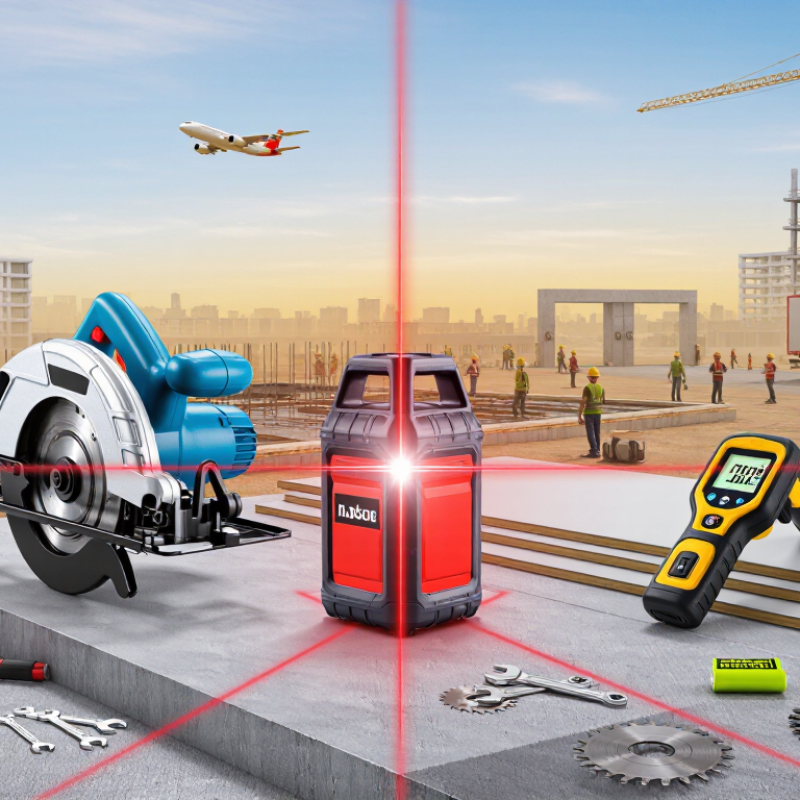
Building materials tools are equipment used to measure, cut, shape, join, test, and install construction materials. Their scope covers hand tools, power tools, measuring devices, lifting equipment, and inspection instruments. These tools support work with concrete, steel, timber, glass, insulation, and composite panels.

On a concrete site, workers may use mixers, trowels, cutters, moisture meters, and vibration tools. A timber project requires saws, drills, clamps, levels, and fastening tools. Global projects also demand equipment suited to local power systems, climate conditions, material properties, and safety requirements. A humid coastal site may require corrosion-resistant tools. Dusty environments need stronger protection and easier cleaning.

Definition matters. It prevents teams from treating every tool as interchangeable. A tool may perform well in a workshop but fail beside a windy tower or on uneven ground. Experience shows that calibration records, maintenance logs, and operator training often matter as much as tool capacity. Measured results should be checked against project specifications and applicable local standards.

No tool is perfect. Our first selection is not always right. A heavy cutter can increase fatigue, while a compact model may reduce productivity. Practical evaluation should consider accuracy, handling, repair access, replacement parts, and training time. Reliable tools support consistent workmanship, but disciplined use remains essential.

Key Factors in Selecting Tools for Global Construction Projects

Choosing tools for global construction projects requires more than comparing prices or catalog images. Site conditions can change from humid coastal zones to dusty inland developments. A tool must suit local materials, voltage systems, climate, and working habits. I have seen a reliable cutter perform poorly when its blade was not matched to dense regional stone. Small details matter.

Durability should be tested under realistic pressure. Check operating temperatures, dust protection, vibration control, and replacement-part availability. Clear manuals are essential when teams speak different languages. Safety instructions should follow recognized international practices and local regulations. Training also matters. A powerful tool is not automatically a safe tool.

Project managers should review supplier documentation, inspection records, warranties, and service response times. Independent test results can support technical claims, but field feedback remains valuable. Ask workers how the tool feels after six hours, not six minutes. I once underestimated fatigue during a large installation, and productivity dropped quietly over several days. That mistake changed my selection process. Now, I compare maintenance intervals, carrying weight, calibration needs, and repair access before approval. The cheapest option may become expensive when one missing component delays an entire crew. Reliable selection is practical, evidence-based, and open to revision.

How Building Materials Tools Support Quality and Efficiency

On global construction sites, quality often depends on small measurements made repeatedly. A laser level can expose a wall alignment error before finishes hide it. Moisture meters help crews avoid sealing damp concrete inside a floor system. These tools support decisions with visible evidence, not guesswork. Yet readings are useful only when operators understand surfaces, temperature, and calibration dates. I have seen teams trust a perfect screen reading while the sensor was overdue for calibration. That mistake is easy to miss.

Building materials tools also improve efficiency by reducing rework. A digital scale keeps mortar proportions consistent across different shifts and locations. Torque tools help installers apply fastener pressure within the specified range. Barcode or photo records can connect each test to a batch, room, and inspection time. This creates a clearer trail for engineers, contractors, and clients. It also speeds handovers when project teams speak different languages. Simple forms work best. Complex ones are often ignored.

Reliable practice needs more than equipment. Staff should receive task-based training and repeat critical checks under real site conditions. Independent verification is valuable for concrete strength, fire-rated assemblies, and load-bearing connections. Local climate matters too; humidity, dust, and unstable power can affect results. Some tools fail in harsh environments. Plans should include manual checks and spare measuring equipment. Efficiency should never mean skipping evidence. A faster process with weak records may become an expensive repair later.

Safety, Compliance, and Compatibility Across Different Regions

Why Choose Building Materials Tools for Global Projects?

Safety, Compliance, and Compatibility Across Different Regions

Building materials tools must perform safely in unfamiliar working conditions. A dusty renovation site, a humid coastal project, and a cold mountain installation create different risks. Reliable tools should offer stable handling, clear controls, and suitable protection against dust or moisture. Small details matter. Non-slip grips can prevent accidents when workers wear wet gloves.

Compliance also changes across regions. Project teams should check local safety requirements, electrical specifications, noise limits, and required documentation before purchasing equipment. Test certificates, inspection records, and maintenance instructions support responsible decisions. Labels and manuals should be available in languages workers understand. A warning that cannot be read is not useful.

Compatibility deserves equal attention. Voltage, plug systems, metric measurements, attachment sizes, and replacement parts may differ between countries. A tool can work perfectly in one location but fail after relocation. Site managers should confirm connections and dimensions before delivery. Qualified technicians can review these details and train local users. This step is often skipped, unfortunately. Generic adapters may appear convenient, yet they can reduce stability or create overheating risks.

Experience also reveals an uncomfortable truth: no tool selection is perfect. Weather changes, supply delays, and unfamiliar site habits can expose weaknesses. Regular inspections, user feedback, and documented corrections make the equipment plan more dependable. Tools should fit the region, the task, and the people using them.

Procurement, Maintenance, and Long-Term Project Value

Why Choose Building Materials Tools for Global Projects?

Procurement decisions shape a project long before materials reach the site. Experienced teams compare tool durability, repair access, shipping requirements, and local operating conditions. A concrete mixer used in a humid coastal region needs different protection than one used in a dry inland project. Clear specifications reduce costly substitutions. They also help purchasing teams verify quality before accepting deliveries.

Maintenance should be planned during procurement, not after the first breakdown. Select tools with replaceable wear parts, accessible service panels, and understandable maintenance guides. Keep records visible. A simple log can track operating hours, inspections, lubrication, and recurring faults. These details support safer work and more predictable scheduling. Still, maintenance plans are often too optimistic. Dust, rushed training, and limited spare parts can change the real workload.

Long-term project value depends on total cost, not the lowest invoice. Reliable tools can reduce downtime, rework, emergency transport, and labor disruption. Procurement officers should review warranty terms, technical support, spare-part availability, and expected service life. Local technicians also provide practical evidence about repair conditions. Their experience may challenge assumptions in a supplier’s specification. That feedback deserves serious attention. A tool that performs well in testing may struggle on an uneven site with inconsistent power. Careful evaluation, honest records, and periodic review create stronger value across international projects.

Why Choose Building Materials Tools for Global Projects?

Procurement, maintenance, and long-term project value are closely connected to the global resource and emissions footprint of buildings and construction.

Building and construction account for approximately 50% of global raw-material extraction, 34% of global energy demand, and 37% of energy- and process-related carbon dioxide emissions. Reliable material tools can support more accurate procurement, reduce avoidable waste, simplify maintenance planning, and improve long-term project value.

Source: United Nations Environment Programme and GlobalABC, 2023 Global Status Report for Buildings and Construction.

WhatsApp