China Top 10 Building Materials Tools Manufacturers?

China’s building materials tools industry supports a construction market measured in trillions of yuan. The National Bureau of Statistics reported that China’s construction industry added value reached approximately RMB 8.57 trillion in 2023. This scale creates strong demand for tile cutters, concrete mixers, diamond blades, laser levels, scaffolding tools, and professional installation equipment.

Global market reports also show continued investment in construction, renovation, and infrastructure. Research from Grand View Research and Statista identifies Asia-Pacific as a major construction equipment and building materials market. China remains important because its manufacturers combine broad production capacity with competitive pricing. However, low cost alone does not define a reliable supplier. Product consistency matters more.

This guide examines China’s top 10 building materials tools manufacturers through practical purchasing criteria. These include factory experience, product range, material quality, testing procedures, export history, certifications, and after-sales support. ISO 9001 systems, traceable components, and relevant safety documentation can strengthen supplier credibility. Buyers should still verify certificates and test reports independently. A polished website proves little.

Real performance appears on the jobsite. A diamond blade should cut cleanly through reinforced concrete. A laser level should remain accurate after transport and repeated use. Warranty response also deserves attention. No ranking is flawless. Some manufacturers disclose limited data, while smaller factories may offer strong products without global visibility. Therefore, this overview balances published evidence with practical market signals, while recognizing that local testing remains essential before large-volume purchasing.
China Top 10 Building Materials Tools Manufacturers?

China’s Building Materials Tools Manufacturing Landscape

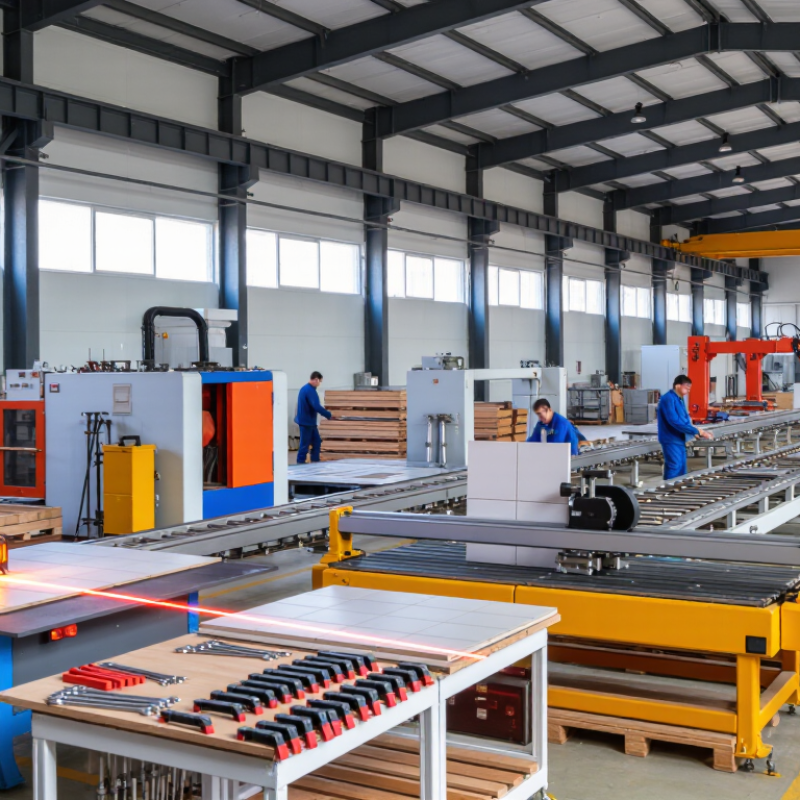
China’s building materials tools manufacturing landscape combines large production facilities with smaller specialist workshops. Manufacturers make tile cutters, mixing equipment, measuring tools, grinding accessories, and other products used on construction sites. Production networks are supported by suppliers of metal parts, motors, plastics, and packaging. This can help factories adjust product designs and order quantities, though capabilities differ widely. It varies.

For buyers, a polished catalogue is only a starting point. Ask how tools are tested, what materials contact points are made from, and whether sample units match later production batches. Check measurements, finish, packaging, and operating instructions on physical samples.

Small details matter. A level with a poorly sealed vial or a cutter with loose components can create avoidable site delays.

Production records and consistent inspection procedures offer useful evidence, but they do not guarantee every shipment will be identical. The landscape is not perfectly tidy: some suppliers communicate clearly, while others provide limited technical detail. That gap deserves attention during supplier evaluation.

Criteria for Ranking the Top 10 Chinese Manufacturers

Ranking Chinese building-materials tool manufacturers requires more than comparing catalog sizes. A credible assessment should begin with documented product coverage, such as cutters, mixers, measuring tools, and surface-preparation equipment. The key question is whether products suit real jobsite conditions, including dust, repeated use, and varying material hardness. Details matter.

Quality should be judged through verifiable evidence: inspection procedures, material specifications, test reports, and traceable batch controls. Factory scale alone proves little. Reviewers should also examine delivery consistency, spare-part availability, warranty terms, and response times for technical questions. When public information is limited, that uncertainty should be stated rather than replaced with assumptions. This is not always easy.

Finally, compare engineering support and product refinement. Clear manuals, practical safety guidance, and steady replacement-part supply can matter as much as price. Customer feedback may reveal recurring issues, but isolated comments should not outweigh documented records. A fair ranking should explain its criteria and date its evidence, since factories and product lines change. No list is perfect; sample access and regional differences can skew findings.

China Top 10 Building Materials Tools Manufacturers? — Criteria for Ranking the Top 10 Chinese Manufacturers

This table presents a proposed, evidence-based scoring framework for comparing manufacturers. The weightings are methodological recommendations, not verified scores or rankings for any specific company. Apply the same 0–5 score to each eligible manufacturer and calculate the weighted total.

No. Evaluation Criterion Weight What to Assess Suggested Evidence
1 Product Quality and Reliability 15% Consistency of product performance, durability, production quality controls, and documented defect or warranty data. Product test reports, inspection records, warranty terms, and verifiable customer feedback.
2 Manufacturing Capability 14% Production processes, equipment, quality-control checkpoints, and ability to maintain consistent output. Factory audit, process documentation, production-line information, and quality-management records.
3 Product Range and Application Coverage 12% Range of relevant tools or equipment for building-material production, processing, installation, or finishing. Current product catalogues, technical specifications, and clearly documented intended uses.
4 Standards and Certifications 10% Validity and relevance of quality, safety, and environmental certifications for the products and markets assessed. Certificate numbers and issuing-body records. Check applicability by product and destination market; examples may include ISO 9001 for quality management and CE conformity where applicable.
5 Research, Development, and Product Improvement 10% Evidence of engineering resources, product testing, design improvements, and responsiveness to technical requirements. Documented product revisions, technical teams, testing facilities, and relevant patent or design records.
6 Export and Market Experience 10% Demonstrated experience supplying international markets and ability to provide market-specific documentation. Verifiable export records, destination-market references, shipping documentation, and product compliance files.
7 Delivery and Supply-Chain Performance 8% Production lead times, order fulfillment consistency, inventory planning, and communication about delays. Documented lead-time commitments, delivery records, order references, and supply-continuity procedures.
8 Customization and Technical Support 7% Ability to adapt specifications, packaging, or tooling and provide practical technical assistance. Examples of completed custom projects, engineering review procedures, manuals, and support response records.
9 Environmental and Workplace Practices 7% Documented management of energy, waste, emissions, worker safety, and applicable environmental obligations. Environmental or occupational safety management records, facility audit results, and valid certifications where held.
10 Commercial Transparency and After-Sales Service 7% Clarity of quotations, specifications, warranty conditions, spare-parts availability, and complaint handling. Written quotations, warranty policies, spare-parts lists, service procedures, and response-time records.
Total Weight 100% Weighted score = sum of (criterion score ÷ 5 × criterion weight). Use documented, comparable evidence and disclose any unavailable data.

Profiles of China’s Top 10 Building Materials Tool Manufacturers

China’s building materials tool industry covers cutting, drilling, mixing, measuring, and surface preparation. This profile examines ten leading manufacturer categories within that supply chain. The comparison uses public catalogs, technical sheets, export experience, and documented quality procedures. Factory claims still need independent verification. That matters.

One manufacturer specializes in diamond blades for concrete and stone. Another develops carbide drill bits for masonry projects. A third supplies electric mixers with adjustable speed control. One focuses on tile cutters, while another produces leveling systems for wall and floor installation. A sixth manufacturer makes compact laser measures for indoor work. Another offers grinding machines with dust-control connections. One serves construction sites with durable hand tools. A further producer focuses on scaffolding and concrete testing accessories. The final profile represents manufacturers producing customized tools for distributors and contractors.

Experienced buyers should inspect blade bonding, motor protection, handle comfort, and spare-part availability. Product certificates can support trust, but they do not replace sample testing. I would request factory videos, batch records, and performance data under realistic workloads. A polished catalog is not enough. Pricing also needs context. Lower costs may reflect simpler packaging, limited service, or different materials.

Some manufacturers show strong engineering depth, yet their English documentation remains uneven. That can slow technical support. Regional service networks also vary widely. These weaknesses deserve attention beside production capacity, delivery reliability, and compliance evidence. A careful buyer should compare tools after field trials, not from photographs alone.

Product Categories, Technologies, and Manufacturing Strengths

China’s top building materials tool manufacturers cover a wide range of product categories. These include tile cutters, concrete mixers, wall grinding machines, laser levels, drilling tools, and compact lifting equipment. Many factories also produce diamond blades, sanding systems, fastening tools, and dust extraction units.

Technology varies across manufacturers. Computer-controlled machining improves dimensional accuracy, while automated welding supports stronger frames. Brushless motors can reduce maintenance and extend operating life. Some producers use vibration testing, overload protection, and heat-resistant components during quality checks. Manufacturing strength often comes from integrated supply chains, skilled technicians, and large-scale production lines. However, a polished sample does not always prove long-term reliability. Field testing still matters.

Tips: Check cutting accuracy, motor performance, noise levels, spare-part access, and warranty terms. Ask for test records and material certificates. For heavy tools, inspect balance and handle comfort. Small details matter. Buyers should compare several production batches, not only one demonstration unit. This step may reveal inconsistent finishing, weak packaging, or unclear inspection procedures. Experienced sourcing teams usually request trial orders before wider procurement. They also verify factory capacity during peak seasons, when rushed production can affect consistency.

How to Choose the Right Chinese Building Materials Tool Supplier

How to Choose the Right Chinese Building Materials Tool Supplier

Choosing among China’s top building materials tool manufacturers requires more than comparing online prices. A dependable supplier should understand your working conditions, material types, and local safety requirements. Ask for factory details, production capacity, quality procedures, and recent test records. A polished catalog is not proof.

Request samples before placing a large order. Check the handle grip, cutting edge, surface finish, balance, and packaging. If possible, let experienced workers test the tools on real concrete, tile, wood, or metal. Small defects often appear during repeated use. I once trusted a sample too quickly, and the bulk shipment showed uneven finishing. That mistake was expensive.

Verify whether the supplier controls key production steps internally or relies on unknown subcontractors. Clear inspection standards should cover raw materials, dimensions, hardness, load performance, and final packing. Ask for inspection photos, batch numbers, and traceable invoices. Communication matters too. Slow replies can become serious delays when specifications change.

Look for evidence of export experience and compliance with the destination market’s rules. Independent quality audits can add useful confidence, but they do not replace your own checks. A video call with the workshop may reveal storage conditions, worker practices, and actual equipment. Request realistic lead times, replacement policies, and written tolerances. The cheapest offer may quietly exclude testing, stronger packaging, or after-sales support. Perfect suppliers do not exist. Careful verification reduces unpleasant surprises.

WhatsApp