
Choosing the top Automated Parking Machine suppliers worldwide requires more than comparing glossy brochures or impressive warehouse images. Buyers need evidence from real installations, including system capacity, retrieval speed, noise levels, and maintenance records. A machine may look efficient during a factory demonstration. Daily traffic can expose different weaknesses.
Parking scholar Donald Shoup famously wrote, “There is no such thing as free parking.” His observation also applies to automated systems. A lower purchase price may conceal software updates, replacement sensors, civil engineering work, or long service delays. This is where supplier reliability becomes practical, not theoretical. Strong companies explain their assumptions clearly. They also provide measurable performance data and verifiable customer references.
This guide examines leading suppliers through an experience-based lens. It considers robotic platforms, shuttle systems, tower parking, pallet systems, safety controls, energy use, and integration with building access technology. Supplier coverage, local technicians, spare-parts availability, and emergency support matter just as much. A parking structure in Tokyo faces different conditions from one in Dubai, London, or Toronto. Climate, site geometry, traffic habits, and municipal requirements can change the best choice.
No ranking is perfect. Data can become outdated. Some manufacturers publish limited failure statistics, which makes comparison difficult. Readers should request current project evidence before signing contracts. The strongest supplier is not always the largest one. It may be the company that responds quickly at 7 a.m., explains a fault honestly, and keeps vehicles moving safely. That detail matters.
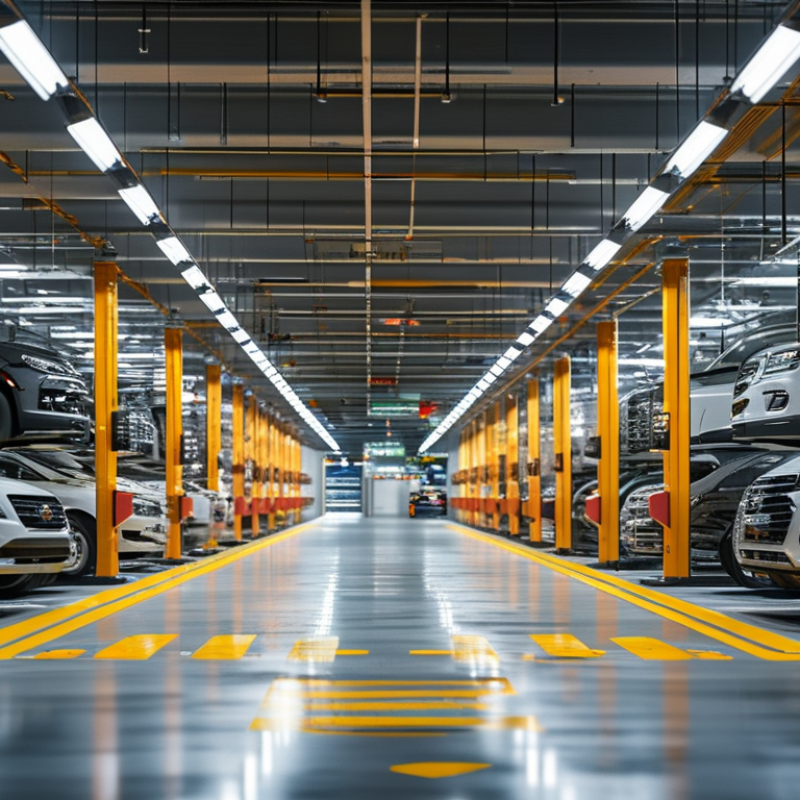
Automated Parking Machines move, store, and retrieve vehicles with limited human driving. They combine mechanical equipment, sensors, software, and safety controls.
Common types include stacker systems, puzzle parking, tower parking, shuttle systems, and automated valet parking. Each design suits different buildings, traffic volumes, and floor areas.
Core technologies include vehicle detection sensors, barcode or license-plate recognition, programmable logic controllers, and warehouse-style lifts. Newer systems may use cameras and real-time software to track empty spaces.
Grand View Research estimated the global automated parking system market at about USD 1.75 billion in 2023, with strong growth expected through 2030. However, market estimates differ because suppliers classify equipment differently. That uncertainty deserves attention. Space matters. So does maintenance.
Tips: Compare throughput, installation depth, retrieval time, emergency access, and local service capacity. Ask for independently tested safety records and documented software updates. A high capacity figure can mislead if peak-hour retrieval is slow. Check the vehicle weight, height, and wheelbase limits before signing a specification. Sensors fail. Backup procedures must remain practical, not merely promised.
According to international parking guidance and engineering practice, clear user instructions, physical barriers, interlocks, and regular inspections are essential. The best system is not always the most automated; it is the one operators can safely understand and maintain.

How to Evaluate Automated Parking Machine Suppliers Worldwide
Selecting automated parking machine suppliers worldwide requires more than comparing prices and polished demonstrations. Examine their engineering experience, completed installations, and ability to handle similar traffic volumes. Ask for project references with measurable results, such as retrieval times, uptime, and maintenance frequency. A supplier with years of experience should explain load limits, vehicle dimensions, weather resistance, and emergency procedures clearly.
Request detailed technical documents before signing anything. Review safety sensors, access controls, software integration, backup systems, and cybersecurity practices. Confirm whether the equipment supports your building layout and local operating conditions. Visit an active installation if possible. Watch how smoothly vehicles enter, how operators respond to faults, and whether maintenance areas are practical. Small details matter.
Check the service network, spare-part availability, training, warranty coverage, and response times. A low purchase price may hide expensive downtime or specialized repairs. Compare the full lifecycle cost, not only the quotation. Suppliers should provide transparent testing records and realistic performance figures. Be cautious when every claim sounds perfect. A polished demo can mislead. No supplier is perfect. Even a strong proposal may omit integration delays, user confusion, or seasonal wear. Ask difficult questions, record every answer, and let an independent engineer review the final specifications.
| Evaluation Dimension | Recommended Benchmark | What to Verify from the Supplier | Suggested Weight | Evaluation Method |
|---|---|---|---|---|
| Relevant Project Experience | At least 5 years of documented experience in automated parking systems and several completed projects of a similar scale. | Project references, completion dates, parking capacity, system type, operating environment, and contactable end users. | 15% | Score higher when references match the proposed system, local regulations, and traffic volume. |
| System Type and Capacity | A clearly defined solution for the site, such as puzzle, stacker, tower, shuttle, rotary, or fully automated parking. | Rated vehicle dimensions, maximum vehicle weight, parking spaces, throughput, retrieval sequence, and expansion capability. | 12% | Compare guaranteed performance with the actual peak-hour demand and available site area. |
| Safety and Compliance | Risk assessment, emergency stop functions, access control, anti-crush protection, overload protection, and documented safety circuits. | Applicable conformity documents, safety calculations, inspection reports, wiring diagrams, and regional approval requirements. | 18% | Require evidence against applicable standards, including EN 14010, ISO 13849-1, and IEC 60204-1 where relevant. |
| Manufacturing Quality | A controlled quality system with traceable materials, inspection records, testing procedures, and corrective-action processes. | Quality certificate scope, factory audit access, component traceability, welding records, inspection plans, and factory acceptance test procedures. | 12% | Give preference to suppliers able to provide third-party certificates and project-specific inspection records. |
| Availability and Lead Time | A written delivery schedule covering design approval, production, testing, shipment, installation, and commissioning. | Standard manufacturing lead time, long-lead components, shipping terms, installation resources, and delay-management procedures. | 8% | Compare the complete project timeline rather than only the equipment production period. |
| After-Sales Service | Defined service coverage, remote diagnostic capability, spare-parts planning, and trained local or regional technicians. | Service response time, escalation process, preventive-maintenance schedule, spare-parts list, and technician qualifications. | 15% | Use service-level commitments with measurable response and restoration targets. |
| Warranty and Lifecycle Support | A clearly written warranty covering equipment, control systems, workmanship, exclusions, and spare-parts availability. | Warranty duration, claim process, consumable exclusions, software support, obsolescence policy, and expected service life. | 8% | Assess total lifecycle risk instead of selecting solely on the initial purchase price. |
| Integration and Cybersecurity | Compatibility with access control, payment, building management, fire alarm, CCTV, and reservation systems where required. | Communication protocols, API documentation, user permissions, backup procedures, software update policy, and network architecture. | 7% | Require interface specifications and cybersecurity responsibilities before contract award. |
| Energy and Environmental Performance | Measured energy consumption, efficient standby operation, suitable corrosion protection, and documented environmental assumptions. | Energy data per operating cycle, motor specifications, noise levels, ingress protection, climate range, and maintenance requirements. | 5% | Compare measured or calculated figures using the same traffic and climate assumptions. |
| Total Evaluation Weight | 100% | Use a documented scoring sheet for transparent supplier comparison. | ||
The automated parking machine market is served by four supplier categories: equipment manufacturers, software and control specialists, system integrators, and retrofit contractors.
Equipment suppliers provide lifts, shuttles, pallets, and rotary platforms. Integrators connect these machines with access control, fire safety systems, payment platforms, and building software.
The distinction matters. A reliable machine can still fail when sensors, software, and maintenance contracts are poorly coordinated.
Regional demand is uneven. Fortune Business Insights valued the global automated parking system market at about USD 2.26 billion in 2023 and projected continued growth through 2032.
Asia-Pacific benefits from dense cities, limited land, and high-rise residential construction. Japan and South Korea show mature adoption, while China contributes substantial installation volume.
Europe’s strength is different. Tight urban planning, underground construction, and emissions-conscious development support compact parking projects.
MarketsandMarkets identifies Europe as an important region for smart parking expansion, although project approval can be slow.
North America favors automated systems in premium residential buildings, hospitals, airports, and constrained urban garages.
Suppliers there often compete through integration, remote monitoring, and service response rather than machinery alone. This is where procurement teams should look closely.
Uptime claims are not enough. Ask for maintenance records, retrieval-time testing, spare-part availability, and local technician coverage.
Some market reports combine automated parking with broader smart parking technology, so their figures are not perfectly comparable. That weakness deserves attention. A supplier category may appear larger simply because the research definition is wider.
Key Factors in Supplier Selection, Installation, and Maintenance
Selecting an automated parking machine supplier starts with site evidence, not glossy demonstrations.
Ask for load calculations, cycle-time records, and references from facilities with similar traffic. A hospital garage needs different reliability planning than a small residential basement. Review the supplier’s engineering staff, safety documentation, spare-parts policy, and response times. Request a failure log.
During installation, verify clearances, floor strength, drainage, ventilation, and emergency access before equipment arrives.
Experienced contractors coordinate structural, electrical, fire-protection, and software requirements in one schedule. Measure the entry lane twice. Commissioning should test full and empty platforms, sensors, barriers, alarms, and manual recovery procedures. Operators need hands-on training for misaligned vehicles and power interruptions. A rushed handover creates hidden costs.
Maintenance quality often determines whether an automated system remains practical after launch.
Choose a supplier offering inspection intervals, remote diagnostics, local technicians, and documented service records. Ask which components are stocked nearby and how long replacements typically take. Monthly checks may include chains, rollers, sensors, lubrication, and abnormal noise. However, schedules should follow usage and environmental conditions, not a fixed template alone.
Optimistic uptime claims deserve careful questioning. Real sites experience dust, peak-hour queues, and occasional operator mistakes. Honest planning allows those weaknesses to be tested before expensive disruptions occur.
Top Automated Parking Machine Suppliers Worldwide?
Future Trends Shaping the Automated Parking Machine Industry
Automated parking is moving from simple space-saving equipment toward connected urban infrastructure. Suppliers now design systems that combine sensors, lifts, conveyors, and software. A driver may leave a vehicle at a ground-level bay, while the system stores it underground within minutes. That small interaction demands accurate positioning, stable communication, and clear user instructions.
Artificial intelligence will improve space allocation and maintenance planning. Cameras and sensors can identify vehicle size, empty bays, unusual movement, and equipment stress. Predictive maintenance may detect a worn cable before it causes a costly shutdown. Yet automation is not magic. Dust, heat, poor drainage, and inconsistent servicing still create real failures. Human inspection remains necessary.
Energy efficiency is becoming a stronger purchasing factor. Future machines may use regenerative braking, low-power standby modes, and rooftop solar integration. Modular designs could also simplify installation in older buildings with limited structural capacity. Suppliers with strong engineering records should provide load calculations, emergency procedures, testing reports, and operator training. Cybersecurity will matter more as parking controls connect with payment systems and building networks. Convenience attracts buyers, but dependable recovery matters more. A system that parks quickly but struggles during a power interruption needs deeper evaluation.
Global urbanization and the rapid growth of electric vehicle sales are two major demand drivers for automated parking machines. These trends increase pressure on land efficiency, charging integration, and digitally managed parking infrastructure.
Urban population figures are rounded estimates based on United Nations World Urbanization Prospects 2024. Electric vehicle sales figures are rounded global estimates based on the International Energy Agency Global EV Outlook 2025. The indicators describe market conditions rather than the sales of individual suppliers or brands.