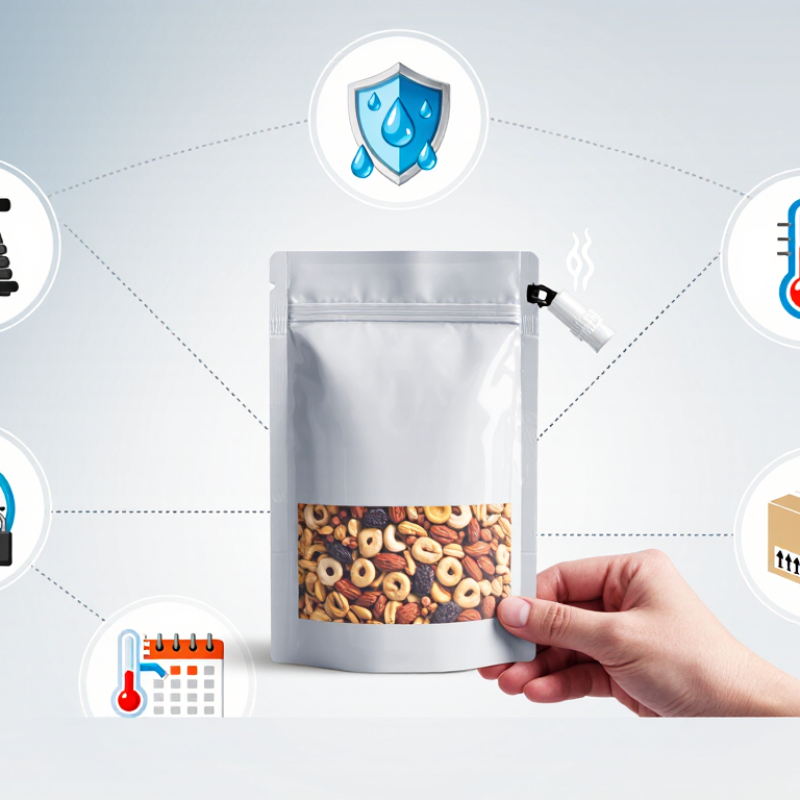
How to Choose the Best Stand Up Pouch for Your Product?

Choosing the best Stand Up Pouch begins with understanding your product, not following packaging trends. Product weight, moisture sensitivity, filling temperature, shelf life, and shipping conditions all matter. A pouch that looks excellent may still fail if its seal weakens or its film blocks insufficient light. Small details become expensive problems.

David Luttenberger, a respected packaging analyst and former Global Packaging Director at Mintel, described packaging as “a brand’s silent salesperson.” That idea fits Stand Up Pouch selection perfectly. The pouch must protect the contents while communicating quality through structure, printing, opening, and shelf presence. A matte finish may suggest premium value. A clear window may build trust. A resealable zipper can reduce waste during repeated use.

Still, appearance should not lead every decision. That is an easy mistake. Start with practical testing. Place the filled pouch under pressure, check the seal after transport, and observe how it stands on a retail shelf. Consider whether customers can grip, open, pour, and reseal it comfortably. Children, older users, and people with limited hand strength may experience the design differently.

Material choice also deserves careful review. High-barrier films can protect coffee, snacks, powders, and sensitive products from oxygen or moisture. However, they may affect recycling options and production costs. A sustainable claim needs evidence, not attractive wording. Suppliers should provide specifications, test results, and clear production capabilities. The best Stand Up Pouch balances protection, usability, visual appeal, cost, and responsible material decisions. It may not be perfect. It should be honestly tested.

How to Choose the Best Stand Up Pouch for Your Product?

Understanding Stand Up Pouch Materials and Construction

Choosing a stand up pouch starts with its material structure, not its printed appearance. In my packaging trials, a pouch that stands well may still fail at the seal. The Flexible Packaging Association’s 2023 industry report valued U.S. flexible packaging sales at about $39.8 billion in 2022. It also identified flexible packaging as roughly 21% of the U.S. packaging market by value. These figures show a mature sector, but they do not make every pouch suitable for every product.

A basic pouch may use polyethylene for flexibility and heat sealing. More demanding products often need laminated layers, such as polyester for stiffness, polyethylene for sealing, or aluminum foil for strong light and oxygen protection. Some high-barrier designs use EVOH, although humidity can reduce its barrier performance. Check the product’s moisture, oxygen, aroma, and light sensitivity before selecting a film. A zipper improves repeated use, while a wide bottom gusset supports shelves and reduces tipping. Small details matter.

Smithers’ packaging research continues to highlight the shift toward recyclable mono-material structures. However, a single-material pouch can sacrifice barrier strength or puncture resistance. That trade-off deserves testing, not marketing language. I have seen attractive samples wrinkle near the seal after filling. Ask suppliers for drop tests, seal-strength data, and shelf-life evidence. The wrong structure can waste materials, filling time, and customer trust. No pouch is perfect.

Matching Pouch Features to Your Product Requirements

A stand-up pouch should fit the product, not merely look attractive on a shelf. Start with product behavior. Powder may settle inside corners, while oily snacks can weaken unsuitable films. Moisture-sensitive contents need a strong barrier against humidity. Aroma-sensitive products may also require odor protection and reliable sealing.

Match the pouch size to the actual fill weight and serving pattern. A pouch that is too large may collapse during transport. One that is too small can strain the seal. Check whether the product needs a zipper, tear notch, spout, or clear window. For hot-filled or refrigerated products, confirm temperature resistance with the converter and request material data. Run filling, drop, compression, and seal tests using real production conditions. Laboratory results alone can miss awkward handling. I learned this after a pouch sealed well in testing but folded badly on a fast packing line.

Tips: Place a small sample in the pouch for 24 hours. Inspect leaks, odor transfer, creasing, and product residue near the seal. Test the opening with wet or oily hands. Measure how easily the pouch stands after repeated use. These simple observations often reveal more than appearance samples. Recheck performance after storage, because a good first impression can be misleading.

Selecting the Right Size, Shape, and Capacity

How to Choose the Best Stand Up Pouch for Your Product?

Selecting the right stand up pouch begins with your product’s actual dimensions. Measure its length, width, and height after filling, not just when empty. Add enough headspace for sealing without crushing the contents. A pouch that looks spacious may still fail when the product settles unevenly. I have seen this happen with granules and irregular snacks. Product density matters.

Shape also affects performance. A flat-bottom pouch offers strong shelf stability for heavier contents. A narrower design may suit powders, small portions, or products stored in tight spaces. Consider how customers will hold, open, pour, and reseal the pouch. Rounded corners can improve handling, while a wider top opening makes filling easier. The best shape is practical, not merely attractive.

Tips: Test three pouch sizes with real product samples. Check standing stability on a crowded shelf. Measure the filled capacity after transport simulation. Leave room for sealing, but avoid excessive empty space. A trial may reveal that your first size was too large. That is useful information. Also inspect the seal area for wrinkles, especially when the pouch contains fine particles. Ask a packaging technician to review the final dimensions and closure method before production.

Choosing Closures, Barriers, and Customization Options

How to Choose the Best Stand Up Pouch for Your Product?

A stand up pouch should match the product’s handling, shelf life, and customer habits. Start with the closure. A press-to-close zipper suits snacks and dry ingredients opened often. A slider closure feels easier for some users, but it can increase material and cost. For liquids or sauces, a spout may offer cleaner pouring. Test the seal after repeated opening. Real use is rougher than a factory sample.

Barrier selection needs careful attention. Products sensitive to oxygen may need high oxygen resistance. Moisture-sensitive powders require strong water-vapor protection. Light-sensitive contents may need an opaque or metallized layer. Aroma can escape through weak structures, even when the pouch looks perfect. I have seen attractive packaging fail because the barrier was chosen too late. Product testing remains essential, especially under heat, humidity, and transport pressure.

Tips: Match the closure to daily use. Test filled pouches, not empty film. Check zipper comfort with wet or oily hands. Consider tear notches, rounded corners, windows, printing, and handle holes. Custom sizes can reduce wasted space, but unusual dimensions may raise tooling costs. Small details matter. A wider base can improve shelf stability, while a softer pouch may feel less premium. The “best” option is sometimes a compromise, and that deserves honest review.

How to Choose the Best Stand Up Pouch for Your Product? - Choosing Closures, Barriers, and Customization Options
Decision Area Option Typical Construction or Specification Key Protection or Function Suitable Product Applications Main Advantages Important Considerations
Closure Press-to-Close Zipper Interlocking polyethylene zipper integrated into the pouch opening Allows repeated opening and closing; helps reduce exposure to air and moisture after opening Snacks, dried fruit, nuts, confectionery, pet treats, powdered foods Reusable User-friendly Widely available Not a hermetic seal after filling; the pouch normally requires heat sealing above the zipper for initial tamper evidence
Slider Zipper Plastic slider attached to a track-style zipper Provides a visible, convenient opening and closing action Large-format snacks, pet food, coffee, dry ingredients, household products Easy to operate Suitable for larger openings Usually costs more and requires more package width than a standard press-to-close zipper; slider performance depends on correct alignment
Spout and Cap Heat-sealed fitment with a screw cap; common spout diameters include approximately 8–16 mm Controlled dispensing of liquids, gels, sauces, and semi-liquid products Baby food, sauces, beverages, detergents, personal-care gels, liquid supplements Controlled pouring Resealable Portable Spout position, cap size, filling method, and leak testing must be matched to product viscosity and dispensing requirements
Tear Notch with Heat Seal Laser- or die-cut notch combined with a permanent top heat seal Single-use opening with a strong sealed barrier before opening Seasonings, sauces, medical products, samples, single-serve powders Low cost Tamper-evident Simple filling Not resealable; tear force should be tested to avoid difficult opening or accidental product spillage
Barrier PE-Based Barrier Structure Single- or multi-layer polyethylene film; often selected for moisture resistance and flexible sealing Good resistance to water vapor; barrier to oxygen and light is generally lower than foil or metallized structures Shorter-life dry goods, frozen foods, non-sensitive household products Flexible Good sealability Common recycling-oriented choice Confirm oxygen, moisture, aroma, and light requirements with the product shelf-life specification; mono-material designs may require equipment compatibility checks
PET/PE Laminate Polyester outer web laminated to polyethylene sealing web Improved print surface, stiffness, puncture resistance, and heat-seal performance Moderate protection against oxygen and moisture; exact performance depends on film grades and thickness Dry foods, pet treats, powders, personal-care products, household products Good print quality Strong structure Reliable sealing Usually a multi-material structure, which can limit recycling options where collection systems require mono-material packaging
Metallized Film Laminate Plastic film coated with a thin layer of aluminum, laminated to a sealant layer High reflectivity and significantly improved protection from light, oxygen, and moisture compared with standard clear films Helps protect aroma, color, flavor, and oxidation-sensitive products Coffee, nuts, snacks, powdered beverages, spices, nutraceutical powders High barrier Light protection Premium appearance Metal detection and microwave use may require product-specific testing; metallized film is not the same as aluminum foil laminate
Aluminum Foil Laminate Plastic film laminated with aluminum foil and a heat-sealable inner layer Very high barrier when the foil layer remains continuous and free from pinholes Strong protection against oxygen, water vapor, light, and aroma transfer Long-shelf-life coffee, sensitive powders, retort products, pharmaceutical and specialty food applications Maximum barrier Excellent light block Strong aroma protection Higher material cost and lower flexibility in recycling streams; foil integrity must be verified after forming and handling
EVOH or High-Barrier Polymer Structure Polymer film or coextrusion containing an oxygen-barrier layer such as EVOH High oxygen barrier with a transparent appearance in many constructions Reduces oxygen transmission while allowing product visibility, depending on the complete laminate and humidity conditions Oxygen-sensitive foods, sauces, chilled products, and applications requiring a clear package Transparent option High oxygen barrier EVOH barrier performance can decrease at high relative humidity; the final structure should be tested under actual storage conditions
Customization Size and Capacity Common pouch formats range from single-serve sachets to multi-kilogram family packs; dimensions are selected by fill weight, bulk density, and headspace Controls product quantity, shelf footprint, transport efficiency, and consumer handling All product categories Flexible sizing Efficient storage Fill volume is not equal to pouch capacity; powders, irregular pieces, and products requiring headspace need additional volume allowance
Bottom Gusset K-seal, Doyen-style, or round-bottom construction that allows the pouch to stand upright Improves shelf stability and creates a larger front-facing display area Dry foods, pet food, coffee, detergent, garden products, and household goods Stable presentation Good shelf visibility Gusset geometry affects filling efficiency, usable volume, seal strength, and the final footprint on shelves
Printing and Finish Rotogravure or digital printing; matte, gloss, soft-touch, spot varnish, or transparent windows may be specified Supports branding, product information, product visibility, and shelf differentiation Retail food, cosmetics, pet products, household products, and promotional packaging High visual impact Variable artwork options Ink adhesion, scuff resistance, color consistency, barcode readability, and food-contact compliance should be verified
Functional Features Laser scoring, easy-open notch, degassing valve, hang hole, rounded corners, handle, or child-resistant feature Improves usability, pressure management, portability, or opening control Coffee, pet food, powders, medical products, cleaning products, and on-the-go formats Improved convenience Application-specific design Every added feature can influence tooling, lead time, cost, seal area, and compatibility with automated packaging equipment
Sustainability-Oriented Design Reduced material thickness, recycled content where permitted, or mono-material PE/PP construction May reduce material use or improve compatibility with specific recycling systems Products with defined sustainability targets and suitable distribution conditions Material reduction Recycling-focused design Recyclability depends on local collection and sorting infrastructure; barrier, seal strength, print, and filling performance must not be assumed from material labels alone
Performance Checks Seal Strength and Leak Resistance Tested through seal-strength, burst, vacuum, dye-penetration, or pressure-decay methods as appropriate Confirms that the pouch withstands filling, transport, stacking, and normal consumer handling Liquid, powder, oily, sharp-edged, and heavy products Reduces leakage risk Supports quality control Testing should use the actual product, filling temperature, sealing equipment, and distribution conditions
Barrier Verification Oxygen transmission rate and water-vapor transmission rate are commonly reported in cc/m²/day and g/m²/day, respectively, under specified test conditions Measures how well the complete pouch structure limits oxygen and moisture transfer Oxidation-sensitive, moisture-sensitive, aroma-sensitive, and long-shelf-life products Data-based selection Shelf-life support Results vary with temperature, relative humidity, film thickness, test method, and pouch design; request complete-structure test data rather than relying only on resin names
Regulatory and Product Compatibility Food-contact, chemical-resistance, migration, odor, and temperature requirements reviewed against the intended market and filling process Ensures the package is suitable for the product and legal market requirements Food, pharmaceutical, cosmetic, chemical, and high-temperature applications Risk reduction Application compliance Requirements differ by country and product category; validate the final pouch, ink, adhesive, closure, and processing conditions together
Selection guideline: Start with the product’s sensitivity to oxygen, moisture, light, aroma loss, and leakage. Then select the closure, barrier structure, pouch size, and functional features based on shelf-life targets, filling equipment, distribution conditions, regulatory requirements, and local recycling infrastructure.

Evaluating Sustainability, Cost, and Supplier Reliability

Choosing a stand up pouch requires more than checking its shelf appeal. Sustainability, cost, and supplier reliability must be measured together. The OECD’s Global Plastics Outlook reports that global plastic waste doubled from 2000 to 2019, while only 9% was recycled. This makes material selection important. A mono-material pouch may improve recycling potential, but it can require different barrier layers or sealing settings. A lighter pouch also reduces transport weight. However, lower material use does not automatically mean lower environmental impact.

Cost should include the full landed price, not just the unit quote. Ask about minimum order quantities, cylinder charges, freight, storage, filling-line adjustments, and rejected units. I have seen inexpensive pouches become costly after repeated seal failures. Request migration testing, seal-strength results, and a product specification sheet. Deloitte’s 2023 Global Chief Procurement Officer Survey identifies supply disruption management as a continuing procurement priority. That matters when your packaging schedule depends on one factory.

Tips: Compare at least three suppliers using the same specification. Check production capacity, backup material sources, lead-time history, and corrective-action records. Ask for recent on-time delivery data. A supplier promising everything deserves careful questioning. Also inspect sample pouches physically: rub the print, test the zipper, and examine corner seals. Sustainability claims can sound impressive. Without clear evidence, they remain only claims.

Article Source:

WhatsApp