
What Is an FBE Coating LSAW Steel Pipe Factory?

An FBE coating LSAW steel pipe factory manufactures longitudinal submerged arc welded pipes and applies fusion-bonded epoxy to protect their surfaces. LSAW pipes are formed from steel plates, welded along a longitudinal seam, and prepared for coating. The factory’s work connects steelmaking, welding, surface treatment, and quality control. Each stage affects the finished pipe.

Preparation matters. Abrasive blasting removes mill scale and contaminants, leaving a clean surface for bonding. The pipe is then heated, and epoxy powder is applied, often using electrostatic equipment. Heat melts and cures the powder into a continuous layer. Operators monitor coating thickness, surface condition, and curing parameters. Inspectors may also use holiday detection to locate discontinuities that are not visible to the eye. Small flaws matter.

A capable FBE coating LSAW steel pipe factory should explain its production controls, inspection methods, and product records clearly. Buyers can ask how the factory handles pipe dimensions, coating repairs, and project-specific requirements. These details help compare suppliers more reliably than broad claims about quality. Still, no process removes every risk. Coating performance depends on steel condition, handling, installation, and service environment, too. A detailed factory introduction should therefore describe both its strengths and the limits of its process. That practical view helps readers understand what the coating can do—and what it cannot promise.
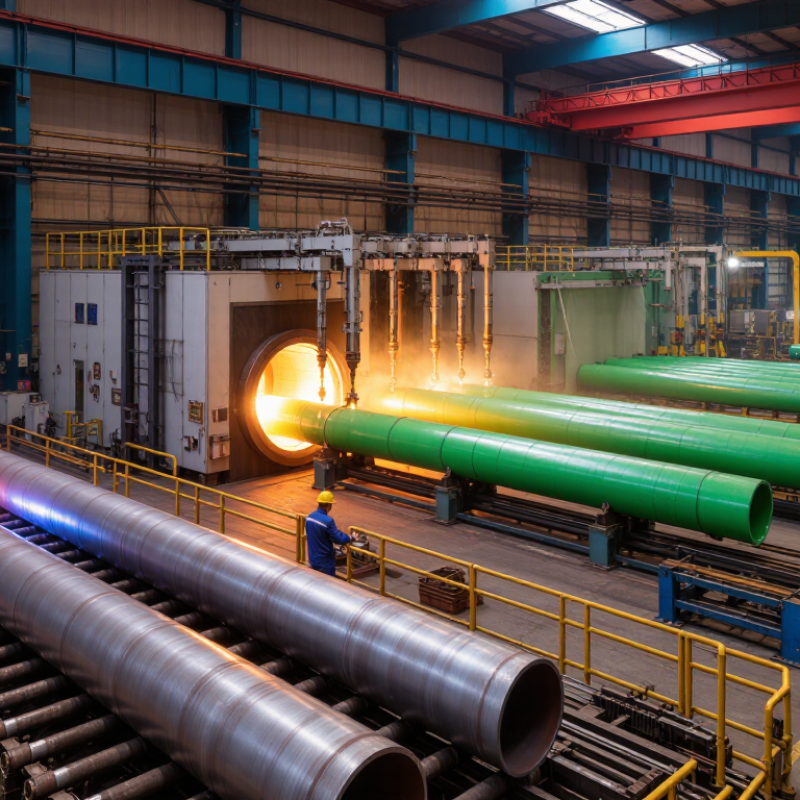
What Is an FBE Coating LSAW Steel Pipe Factory?

What an FBE Coating LSAW Steel Pipe Factory Produces

What an FBE Coating LSAW Steel Pipe Factory Produces

An FBE coating LSAW steel pipe factory produces large-diameter pipes for water, energy, construction, and industrial transport systems. LSAW means Longitudinal Submerged Arc Welding. Workers form steel plates into cylinders and weld the seam under controlled conditions. The result is a strong pipe with consistent dimensions. Production details matter. Plate grade, wall thickness, weld quality, and pipe length must match the project specification.

The factory then prepares the pipe for fusion-bonded epoxy coating. Steel surfaces are cleaned through abrasive blasting. This removes rust, mill scale, and loose particles. The pipe is heated before epoxy powder is applied electrostatically. The powder melts and forms a continuous protective layer. Inspectors check coating thickness, adhesion, surface defects, and holiday damage. They also review weld inspection records and material traceability. The process is controlled, but not magically perfect. Dust, uneven heating, or handling marks can still create problems. Experienced teams inspect these details before shipment.

Tips: Check coating standards early. Confirm pipe dimensions, epoxy thickness, inspection methods, and repair procedures in writing. Ask for test records and traceable material documents. Do not judge quality from appearance alone. A smooth surface helps, but performance depends on preparation and testing.

What an FBE-Coated LSAW Steel Pipe Factory Produces

Representative dimensions of large-diameter LSAW steel pipe products

LSAW (longitudinal submerged arc welded) pipe is formed from steel plate and welded along a straight seam. Factories may apply fusion-bonded epoxy (FBE) as an external corrosion-protection coating. The chart shows representative pipe-size examples, not production volumes or a universal product range; available dimensions depend on the applicable specification and mill.

How LSAW Steel Pipes Are Formed and Welded

An LSAW pipe starts as a thick steel plate. Operators check its surface, then mill the plate edges to create clean, consistent weld preparation. Large presses shape the plate into a cylinder, often using the UOE sequence: U-pressing, O-pressing, and mechanical expansion. Some mills use JCOE forming, bending the plate through successive presses. The fit-up matters. Even a small edge mismatch can affect the weld seam.

The longitudinal seam is typically welded from both sides using submerged arc welding. Flux covers the arc, helping protect the molten weld metal as the pipe travels through the welding line. Technicians then inspect the seam with nondestructive testing, such as ultrasonic examination, and may conduct a hydrostatic test. Details vary by pipe specification and service conditions. Not every mill sequence is identical.

The material scale is substantial: the World Steel Association’s World Steel in Figures 2024 reports global crude steel production of 1,892.2 million tonnes in 2023. That figure describes the wider steel industry, not LSAW pipe output. Still, it helps explain why plate quality control matters. In an FBE coating factory, the formed and tested pipe is later cleaned and coated; coating cannot correct a poor weld. The forming process is precise, but real production still demands careful adjustment.

How Fusion-Bonded Epoxy Coating Is Applied

At an FBE coating line for LSAW steel pipe, preparation starts before any powder is sprayed. Workers remove oil, moisture, and mill scale, then abrasive-blast the surface to create a clean, even profile. A pipe may look bright, but appearance alone cannot confirm cleanliness. Dust and soluble salt checks matter. Small residues can weaken adhesion later.

The cleaned pipe moves through an induction-heating station, where its steel surface reaches the specified application temperature. Electrostatic guns charge fine epoxy powder and direct it onto the rotating pipe. The powder melts on contact, flows into a continuous layer, and cures as the pipe travels along the line. Timing matters. Too little heat can leave poor fusion; too much may affect coating performance. Operators monitor temperature, powder delivery, and line speed, then check coating thickness and use holiday detection to find pinholes. Ends are usually left uncoated for welding. Even with careful controls, results can vary around weld seams or pipe ends, so inspection records and occasional process review are essential. The process is precise, but not effortless.

What Is an FBE Coating LSAW Steel Pipe Factory? - How Fusion-Bonded Epoxy Coating Is Applied
Production Stage Typical Process or Parameter Purpose and Quality Checks
LSAW pipe preparation Longitudinal Submerged Arc Welded (LSAW) pipe is manufactured, welds are inspected, and the pipe is checked against the order specification before coating. Confirms the pipe is suitable for coating and that required dimensional and weld-quality inspections are complete.
Coating inspection Remove oil, grease, dirt, moisture, and other contaminants before abrasive blasting. Contamination can interfere with adhesion. The pipe surface is checked for cleanliness and visible defects.
Abrasive blasting Blast-clean the steel to a specified near-white-metal condition, commonly Sa 2½ under ISO 8501-1. A surface profile around 50–100 μm is often specified, depending on the coating system. Creates a clean, suitably rough surface for mechanical bonding. Cleanliness and profile are verified using the project’s inspection methods.
Dust removal and surface check Remove blasting dust and inspect for rust, embedded abrasive, flash rust, or other surface contamination. Helps prevent coating defects and loss of adhesion. Surface condition is checked before heating and powder application.
Pipe preheating Heat the pipe uniformly to the temperature required by the selected FBE powder and application procedure. The target is set by the coating specification and product data. Preheating allows the powder to melt, flow, and cure on contact. Pipe temperature is monitored at appropriate locations.
FBE powder application Apply thermosetting epoxy powder, typically by electrostatic spray, to the heated pipe surface. The powder melts and forms a continuous film. Application conditions are controlled to achieve the specified coverage and thickness.
Fusion and curing Allow the coating to flow and cure according to the powder manufacturer’s validated temperature and time requirements. Proper curing develops the coating’s protective properties. Temperature and process records support production control.
Cooling Cool the coated pipe in a controlled manner before handling and final inspection. Reduces the risk of handling damage while the coating is still hot or insufficiently hardened.
Coating thickness A single-layer FBE coating is commonly specified at approximately 300–500 μm, although required thickness varies by service, standard, and project. Thickness is measured at specified locations using a suitable calibrated gauge and compared with the order requirements.
Holiday detection Inspect the finished coating for discontinuities using a detector set to the voltage required by the applicable standard and coating thickness. Identifies pinholes or other electrical discontinuities that could expose the steel. Any detected defects are repaired and rechecked.
Adhesion and visual checks Carry out the specified visual examination and, where required, adhesion or other coating tests using the project’s test method. Checks coating continuity, appearance, and bonding against the acceptance criteria in the applicable specification.
Repair, marking, and handling Repair accepted defects with an approved repair procedure, then protect the coating during marking, stacking, and transport. Ensures repaired areas meet the specified checks and helps prevent damage before installation.

Values shown are typical industry references, not universal acceptance limits. Final process settings and inspection criteria depend on the applicable standard, coating system, service conditions, and project specification.

How Pipe Quality and Coating Performance Are Tested

Pipe quality checks begin before fusion-bonded epoxy coating is applied. Inspectors verify pipe dimensions, straightness, and weld appearance, then use suitable nondestructive testing to look for weld defects. Surface preparation matters just as much. Oil, rust, or residual scale can weaken coating adhesion, so the cleaned steel is checked for cleanliness and surface profile.

The coating line is monitored for steel temperature, powder application, and curing conditions. After cooling, inspectors measure coating thickness at several points, including areas near the weld and pipe ends. A holiday detector checks for pinholes or other discontinuities that could expose bare steel. Small flaws matter. Adhesion and impact tests can provide further evidence that the coating is firmly bonded and can withstand handling. Results should be recorded against the pipe’s identification number, not just the production batch.

Good testing combines measurements with careful visual inspection. A thick coating is not automatically a sound coating; poor surface preparation can still cause disbondment. It is also easy to overlook damage during stacking or transport, so finished pipes need another inspection before dispatch. Test frequency and acceptance limits depend on the project specification, and a factory should make those criteria clear. One practical weakness remains: sampling cannot reveal every defect on every pipe, which is why process control and traceable inspection records matter.

Where FBE-Coated LSAW Steel Pipes Are Used

FBE-coated LSAW steel pipes are used where large-diameter lines need a durable barrier against corrosion. FBE means fusion-bonded epoxy, applied to prepared steel and cured into a continuous coating. These pipes commonly carry water, oil, and gas across long routes, including buried sections exposed to damp soil. A trench with wet clay or shifting backfill can challenge an unprotected pipe. The coating helps isolate the steel from that environment.

They also serve in industrial water systems, wastewater networks, and some coastal or marine-adjacent projects. LSAW pipes are often selected for demanding transmission work because their welded construction supports large diameters and substantial wall thicknesses. Still, FBE is not a universal answer. Operating temperature, conveyed fluid, soil conditions, and handling damage all affect coating performance. A scratched area at a field joint may need careful repair before burial. That detail is easy to underestimate. Project teams should confirm coating compatibility and inspection requirements against the actual service conditions, rather than choosing a pipe by coating name alone.

WhatsApp