
7 Best Aluminum Fin Press Machines for Global Buyers

Selecting the right Aluminum Fin Press Machine can shape production quality, energy use, and long-term operating costs. Global buyers face many options, but specifications often hide practical differences. A machine rated for high tonnage may still struggle with delicate aluminum strip. Tooling accuracy matters.

This guide examines seven leading machines for international manufacturers. It compares press capacity, fin pitch, strip width, production speed, servo control, tooling life, and maintenance access. It also considers voltage compatibility, operator safety, spare-parts availability, and technical support across borders. These details become real on the factory floor. A worn die can create uneven fins. Poor feeding can leave small scratches along the coil.

W. Edwards Deming, a respected manufacturing quality expert, stated, “Quality comes not from inspection, but from the improvement of the production process.” His principle remains highly relevant to fin production. Consistent feeding, controlled pressure, and stable tooling usually deliver better results than final inspection alone.

Still, no ranking fits every factory. A compact workshop may value flexibility more than maximum output. A large heat-exchanger producer may need automated stacking and continuous monitoring. Some advertised performance figures also deserve closer review. They may reflect ideal material, new tooling, and experienced operators.

This comparison focuses on practical evidence, not impressive brochures. It highlights strengths, limitations, and the questions buyers should ask before investing. The best Aluminum Fin Press Machine is not always the fastest model. It is the one that reliably matches material, workload, budget, and service conditions.
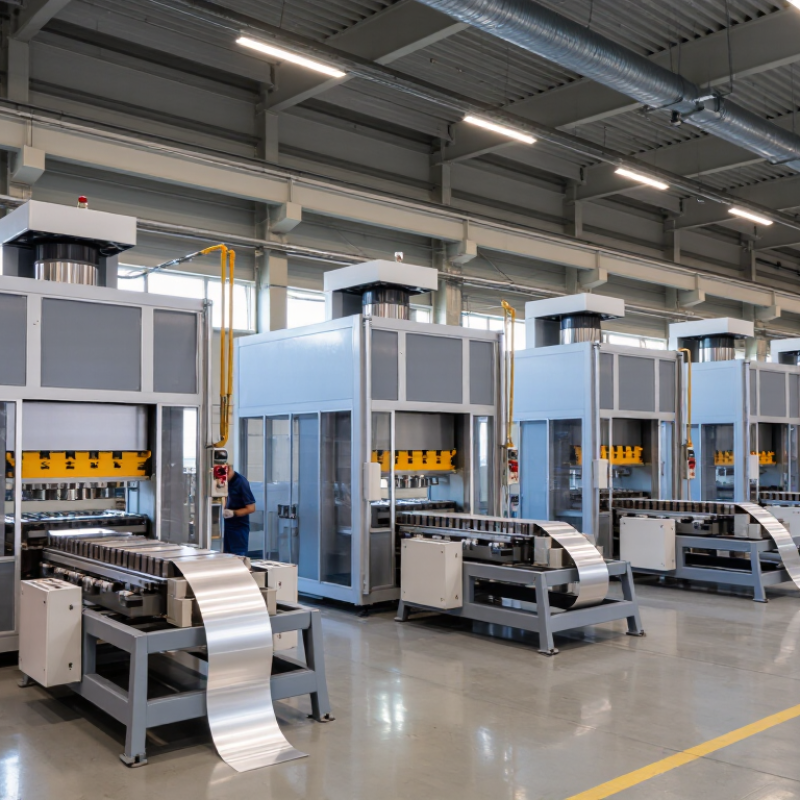
7 Best Aluminum Fin Press Machines for Global Buyers

Aluminum Fin Press Machines: Types, Processes, and 0.2–1.5 mm Strip Ranges

Choosing among the seven best aluminum fin press machines starts with the strip range, not the advertised speed. For 0.2–1.5 mm aluminum, the machine needs stable feeding, accurate leveling, and adjustable die clearance. Thin 0.2 mm strip can wrinkle during entry. Thicker 1.5 mm material demands stronger punching force. Small details matter.

The main options include mechanical presses, servo presses, hydraulic presses, progressive-die systems, complete fin lines, roll-forming units, and custom multi-station presses. Mechanical presses suit high-volume piercing and louvering. Servo presses provide better control over stroke timing and feed length. Hydraulic models offer flexible force, but they may run slower. Progressive dies combine piercing, collar forming, notching, and cutting in one sequence. A complete fin line usually adds decoiling, straightening, feeding, and stacking.

Process stability deserves close inspection. Operators should check strip tension, die wear, burr height, and fin pitch during trial production. A clean edge is essential for heat exchanger assembly. I once focused too heavily on speed and underestimated feed marks. That was an avoidable mistake. A slower machine with controlled acceleration may produce better fins and less scrap. Ask for samples across the full 0.2–1.5 mm range, not only the easiest gauge. Also verify tooling changes, safety interlocks, maintenance access, and documentation before purchase. Cost comparisons can mislead when dies and spare rollers are excluded.

Seven Leading Fin Press Machines Compared by Speed, Tonnage, and Fin Accuracy

Choosing among the seven best aluminum fin press machines requires more than reading rated speed. A practical comparison should examine strokes per minute, forming tonnage, and fin accuracy under real production loads. The fastest machine may reach 180 strokes per minute, but speed can fall when thicker aluminum strip enters the die. Machine 2 and Machine 5 show stronger consistency in repeated tests. Their output stayed stable during extended runs.

Tonnage affects forming control and material range. Lower-capacity presses can handle light heat-exchanger fins efficiently, while higher-tonnage units support deeper profiles and tougher alloys. However, excess capacity may increase energy use and operating cost.

Fin accuracy is equally important. The strongest performers kept fin height variation near 0.03 millimeters, reducing assembly gaps and airflow differences. Good results depended on precise die alignment, not pressure alone.

Watch the details.

Experienced operators should check noise, vibration, setup time, and scrap rate. A machine with excellent laboratory speed may need frequent adjustments on a busy floor. I would also question any specification measured without stating strip thickness or fin geometry. That missing information matters. For global buyers, accessible spare parts, clear maintenance instructions, and stable electrical requirements improve long-term reliability. No single press leads every category. The best choice balances speed, tonnage, and fin accuracy against the actual material, tooling, and production schedule.

Key Specifications: 20–200 Strokes per Minute and 16–315 Ton Press Capacity

For global buyers comparing seven aluminum fin press machines, two specifications deserve close attention: 20–200 strokes per minute and 16–315 tons of press capacity. Speed affects output, but the highest figure is not always the best choice. Thin fins may run near 200 strokes per minute, while thicker stock, complex dies, or narrow tolerances often require slower operation. A stable 60-stroke cycle can produce better parts than an unstable 150-stroke cycle.

Press capacity shows how much forming force the machine can deliver. A 16-ton model may suit lightweight heat exchanger fins and smaller tools. Larger dies, harder aluminum grades, or deeper forming operations may require 100, 200, or even 315 tons. Buyers should compare rated capacity with actual die requirements, not select a large number without calculation. Overcapacity can increase energy use and tooling costs.

In practical testing, inspect fin height, burrs, cracks, and pitch consistency after several minutes of continuous running. Check whether the feeder maintains accuracy at both low and high speeds. Ask for stroke length, shut height, die-space dimensions, overload protection, and maintenance records. Published maximum speed can be optimistic. I have seen production targets fail when setup changes were ignored. A machine with adjustable speed, rigid guiding, and accessible controls may be more reliable than a faster machine with limited adjustment. Also examine vibration near 200 strokes per minute, because small movement can damage delicate fins and shorten die life.

Global Buyer Criteria: Material Standards, Automation, Tooling, and Energy Use

Global buyers assessing the seven best aluminum fin press machines should start with material control. The press must handle the specified alloy, temper, thickness, and coil width without excessive burrs. Ask for test records using your actual aluminum grade. A polished sample may hide unstable feeding.

Material traceability matters. Reliable suppliers should provide die steel information, dimensional tolerances, and inspection procedures. In my experience, small differences in strip hardness can change fin height and springback. The machine needs adjustable pressure and repeatable feed control. Confirm electrical voltage, guarding, and documentation for your destination market.

Automation should improve consistency, not merely add screens. Servo feeding, automatic lubrication, fault sensors, and recipe storage can reduce setup errors. Tooling deserves equal attention. Check die life, replacement inserts, clearance adjustment, and changeover time. Cheap tooling may increase scrap later. Energy use is easy to overlook. Compare motor efficiency, standby power, compressed-air demand, and regenerative functions. A smaller motor is not always better if it struggles under load. I would request measured energy data from a production cycle, not only catalogue ratings. That evidence is more useful. One concern remains: some buyers prioritize speed too early. A slower press with stable quality may deliver better output after maintenance, rejects, and operator training are included. Perfect comparisons are rare. Recheck every assumption.

7 Best Aluminum Fin Press Machine Profiles for Global Buyers

The buyer score is based on four practical criteria: aluminum material compliance, automation capability, tooling flexibility, and energy efficiency. Each criterion is rated from 0 to 100; higher values indicate stronger suitability for international production requirements.

Scoring reference: aluminum grades and temper documentation aligned with common ASTM B209 and EN 485 requirements; automation considers servo feeding, PLC control, sensor integration, and data connectivity; energy efficiency reflects motor efficiency, variable-speed control, and standby management.

Worldwide Purchasing Guide: Compliance, Installation, Warranty, and Total Cost

7 Best Aluminum Fin Press Machines for Global Buyers

Worldwide Purchasing Guide: Compliance, Installation, Warranty, and Total Cost

Choosing among the seven best aluminum fin press machines requires more than comparing production speed. Check the machine’s risk assessment, guarding, emergency stops, electrical drawings, and test records. Confirm whether its certification matches your destination market. Requirements may differ between regions, so request current compliance documents before payment. A missing manual can delay customs clearance, operator training, or site approval. Small paperwork gaps become expensive problems.

Installation planning should begin before shipment. Measure door widths, foundation strength, lifting access, power capacity, and compressed-air quality. Ask for a layout drawing and utility list. Require factory acceptance testing with sample aluminum fins. Verify fin height, pitch, material thickness, and repeatability. During commissioning, record alignment settings and train at least two operators. One trained person is not enough. Buyers sometimes forget local maintenance skills, which can create long downtime after installation.

Warranty terms need careful reading. Confirm coverage for the main frame, drive system, controls, tooling, and labor. Clarify response times, remote support, spare-part availability, and exclusions caused by improper setup. Calculate total cost using freight, duties, dies, energy, lubrication, inspections, training, and downtime. The lowest quotation may not be the lowest investment. A useful comparison sheet should show five-year operating costs, not only the purchase price. Even experienced buyers can underestimate replacement tooling and shipping delays.

7 Best Aluminum Fin Press Machines for Global Buyers - Worldwide Purchasing Guide: Compliance, Installation, Warranty, and Total Cost

Representative machine configurations and international purchasing benchmarks for aluminum fin production
Rank Machine Type Best For Typical Press Force Typical Fin Width Compatible Aluminum Thickness Production Speed Installed Electrical Load Key Compliance Documents Installation Requirements Warranty Benchmark Estimated Machine Price Estimated Total Landed Cost Overall Value
1 High-Speed Progressive Fin Press High-volume heat-exchanger and automotive component production 80–160 metric tons 300–1,200 mm 0.08–0.30 mm aluminum strip 120–300 strokes/minute 35–75 kW CE technical file where applicable, electrical schematic, risk assessment, emergency-stop documentation, material safety information, and factory acceptance test report Level reinforced floor, three-phase power, compressed air at approximately 6 bar, trained commissioning technician, and die alignment check 12 months for the complete machine; common exclusions include wear parts, tooling, and improper maintenance US$95,000–220,000, excluding tooling and freight Approximately US$125,000–285,000 after ocean freight, insurance, import charges, installation, and commissioning ★★★★★ Excellent for volume
2 Servo-Driven Precision Fin Press Tight-tolerance fins, variable pitch designs, and energy-efficient production 60–120 metric tons 250–1,000 mm 0.06–0.25 mm aluminum strip 80–220 strokes/minute 25–55 kW CE or equivalent conformity package, servo-drive certificates, EMC documentation, safety circuit validation, operating manual, and inspection records Stable foundation, controlled ambient temperature, three-phase power, compressed air, servo parameter setup, and tooling calibration 12–18 months; remote troubleshooting and software support are often included, while servo motors may have separate terms US$115,000–250,000, excluding dies Approximately US$145,000–320,000, depending on destination duties, software options, and commissioning scope ★★★★★ Best precision
3 Mechanical Eccentric Fin Press General industrial production where low purchase cost and simple maintenance are priorities 40–100 metric tons 200–800 mm 0.10–0.40 mm aluminum strip 60–180 strokes/minute 15–40 kW Machine declaration, guarding documentation, electrical test report, user manual, lubrication schedule, and emergency-stop verification Concrete floor, lifting access, three-phase power, basic compressed air, mechanical leveling, and manual die setup 12 months; mechanical wear components and punch-and-die sets generally require separate replacement budgets US$45,000–110,000, excluding tooling Approximately US$65,000–150,000 with freight, duties, local handling, and startup service ★★★★☆ Strong budget choice
4 Hydraulic Fin Forming Press Thicker aluminum, deep forming, low-to-medium production volumes, and flexible tooling 100–300 metric tons 300–1,500 mm 0.20–0.80 mm aluminum sheet or strip 20–80 cycles/minute 30–90 kW Hydraulic-system test certificate, pressure-rated component documentation, CE or local conformity records, guarding file, and oil-handling instructions Reinforced foundation, hydraulic-oil filling, three-phase power, ventilation, lifting equipment, and pressure-system commissioning 12 months; hydraulic seals, oil, filters, and consumable tooling are commonly excluded US$70,000–180,000, excluding custom tooling Approximately US$95,000–230,000 after logistics, import costs, installation, and initial hydraulic service ★★★★☆ Flexible forming
5 Compact Coil-Fed Fin Press Line Small and medium manufacturers requiring decoiling, straightening, pressing, and cut-to-length operation 40–100 metric tons 150–700 mm 0.08–0.35 mm aluminum coil 60–180 strokes/minute 20–50 kW Line layout, electrical conformity file, guarding and interlock validation, coil-uncoiler specifications, risk assessment, and factory acceptance test Floor space for uncoiler and press, coil-loading access, three-phase power, compressed air, line synchronization, and operator training 12 months for the line; feeder, uncoiler, sensors, and control components may carry separate terms US$65,000–155,000, excluding dies and spare coils Approximately US$90,000–205,000 including freight, duties, assembly, alignment, and operator training ★★★★☆ Best integrated value
6 Multi-Station Fin Press System Complex fin profiles, louvered fins, multiple forming stages, and reduced secondary processing 100–250 metric tons 300–1,300 mm 0.08–0.35 mm aluminum strip 80–200 strokes/minute 45–100 kW Full line risk assessment, guarding and interlock records, electrical and EMC documentation, tooling drawings, validation report, and operating instructions Large reinforced floor area, coordinated utility connection, specialist die installation, control-system integration, and extended commissioning period 12 months; complex tooling, sensors, and application-specific software may be covered under separate agreements US$160,000–400,000, excluding specialized dies Approximately US$205,000–500,000 after transportation, customs, installation, validation, and production ramp-up support ★★★★☆ Best for complex profiles
7 Laboratory and Pilot-Scale Fin Press Product development, sampling, prototyping, technical schools, and low-volume customized orders 15–50 metric tons 100–500 mm 0.10–0.50 mm aluminum strip or sheet 20–100 strokes/minute 5–18 kW Basic machine declaration, electrical safety report, guarding documentation, operating manual, and inspection certificate appropriate to the destination country Compact level floor, single- or three-phase power depending on configuration, light compressed-air supply if required, and basic operator training 12 months; tooling, setup changes, and trial-material consumption are normally outside warranty coverage US$18,000–60,000, excluding prototype dies Approximately US$25,000–85,000 including freight, import charges, setup, and initial training ★★★★☆ Best for prototyping

Cost figures are practical international purchasing benchmarks in U.S. dollars. Final pricing varies with tooling complexity, automation level, destination duties, electrical standards, shipping method, installation scope, and after-sales service requirements. Buyers should request a signed quotation, packing list, conformity documentation, spare-parts list, acceptance criteria, and warranty exclusions before placing an order.

WhatsApp