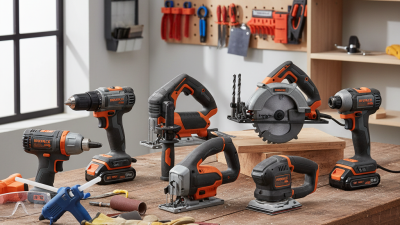
2025 Top Cutting Tools Trends and Technologies Transforming the Industry
The cutting tools industry is on the brink of transformation, driven by innovative technologies and emerging trends that promise to redefine efficiency and precision in manufacturing processes. As the demand for complex geometries and high-performance materials rises, manufacturers are increasingly turning to advanced cutting tools designed to meet these evolving requirements. This article delves into the top trends and technologies shaping the cutting tools landscape in 2025, highlighting how these advancements are poised to enhance productivity and sustainability across various industries.
From the integration of artificial intelligence and machine learning into tool design and performance optimization to the exploration of new composite materials that offer superior durability, the future of cutting tools is bright and dynamic. As we navigate through the changing tides of manufacturing, understanding these trends will be essential for companies seeking to stay competitive. Join us as we explore the innovations that will not only simplify machining operations but also create new opportunities for growth and development in this critical sector.

Emerging Materials in Cutting Tools: Impact on Performance and Longevity
The cutting tools industry is undergoing a significant transformation, primarily driven by the emergence of advanced materials. These innovative materials enhance performance and longevity, addressing the demands of modern manufacturing processes. High-speed steels and carbide alloys have long been staples, but the introduction of ceramic and cermet tools is revolutionizing cutting efficiency. These materials can withstand extreme temperatures and pressures, allowing for faster machining speeds and prolonged tool life, which ultimately reduces production costs.
Moreover, the shift towards composite materials and coatings such as titanium nitride and diamond-like carbon is further enhancing the capabilities of cutting tools. These advanced coatings not only improve wear resistance but also minimize friction, leading to smoother operations and lower heat generation during cutting. As manufacturers increasingly prioritize precision and sustainability, the utilization of these emerging materials is set to redefine industry standards, paving the way for smarter and more efficient manufacturing solutions in the years to come.
Advancements in Coating Technologies for Enhanced Tool Durability
The advancement of coating technologies is revolutionizing the cutting tools industry, enhancing tool durability and performance in unprecedented ways.
Modern coatings such as titanium nitride (TiN), aluminum oxide (Al2O3), and diamond-like carbon (DLC) are engineered to withstand extreme temperatures and pressures. These coatings significantly reduce friction between the tool and the material being cut, leading to smoother operations and extended tool life. As manufacturing environments become more demanding, the resilience offered by these advanced coatings is essential for maintaining efficiency and productivity.
Furthermore, innovations in coating application techniques, such as physical vapor deposition (PVD) and chemical vapor deposition (CVD), have made it possible to achieve uniform and precise coatings on complex geometries. This results in greater machining accuracy and consistency, minimizing the wear and tear on cutting tools. Additionally, new hybrid coatings that combine multiple material properties are emerging, providing tailored solutions for specific machining scenarios. As these coating technologies continue to evolve, they play a crucial role in transforming cutting tools into more durable and efficient instruments, aligning with the industry's push towards higher performance and sustainability.
Automation and Smart Manufacturing: Revolutionizing Tool Selection Process
The advancement of automation and smart manufacturing technologies is significantly transforming the tool selection process in the cutting tools industry. According to a report by Technavio, the global smart manufacturing market is projected to grow by over $290 billion by 2025, with automation playing a pivotal role. This growth is driven by the need for increased efficiency, reduced operational costs, and enhanced precision in manufacturing processes. As manufacturers increasingly adopt smart systems, they are utilizing data analytics and machine learning to determine the most suitable cutting tools for their production needs, greatly simplifying what was once a complex selection process.
Moreover, the introduction of Industry 4.0 technologies allows for real-time monitoring and feedback, enabling manufacturers to dynamically adjust their tool choices based on production demands and tool performance. A study by MarketsandMarkets indicates that the integration of IoT in manufacturing will lead to a 10-20% reduction in downtime and increased productivity by up to 30%. By leveraging these technologies, manufacturers not only streamline tool selection but also optimize production efficiency, thus embracing a more responsive and intelligent manufacturing environment. This evolution highlights the industry's shift towards data-driven decision-making, ensuring that cutting tools are not only effective but also aligned with contemporary manufacturing goals.
Sustainability Trends in Cutting Tools: Biodegradable and Recyclable Options
The cutting tools industry is undergoing significant transformation, particularly with an increasing focus on sustainability. As companies strive to reduce their environmental impact, biodegradable and recyclable options are gaining prominence. These innovative materials not only provide high performance but also minimize ecological footprints by reducing waste. For instance, cutting tools made from plant-based composites are now being developed, allowing for both efficiency in manufacturing processes and eco-friendly disposal at the end of their lifecycle.
When considering sustainable options, manufacturers should look into tools that can be repurposed or recycled after use. This not only contributes to resource conservation but also enhances the company's brand reputation among increasingly eco-conscious consumers.
**Tips:** One effective strategy is to partner with suppliers who prioritize sustainability in their production processes. Additionally, ensure that all employees are educated on the proper disposal methods for cutting tools to promote a culture of sustainability within the organization. Investing in research and development of compostable materials can also place your company at the forefront of the cutting tools revolution.
2025 Cutting Tools Sustainability Trends
The Role of AI and Machine Learning in Optimizing Cutting Tool Operations
The integration of AI and machine learning in cutting tool operations is revolutionizing the manufacturing sector. According to a report by Deloitte, the use of AI in production processes can lead to a 10-20% reduction in operational costs while enhancing productivity. By employing predictive analytics, manufacturers can anticipate tool wear and failure, reducing downtime and maximizing efficiency. This shift towards smart manufacturing is making it essential for businesses to adopt AI-driven technologies to remain competitive in the market.
Furthermore, companies like Sandvik Coromant are leveraging machine learning algorithms to analyze vast datasets generated during machining processes. This not only optimizes cutting parameters but also facilitates real-time adjustments, increasing the lifespan of cutting tools. Industry data from McKinsey suggests that businesses incorporating AI and machine learning technologies can enhance their overall equipment effectiveness (OEE) by up to 25%. As these technologies evolve, they will undoubtedly play a critical role in shaping the future of cutting tool operations and enhancing the overall efficiency of manufacturing processes.
2025 Top Cutting Tools Trends and Technologies Transforming the Industry - The Role of AI and Machine Learning in Optimizing Cutting Tool Operations
| Trend/Technology |
Description |
Impact on Industry |
Implementation Challenges |
| AI-driven Optimization |
Using AI to analyze and enhance cutting tool parameters for better performance. |
Increases efficiency, reduces waste, and improves tool life. |
Data integration and employee training on new technology. |
| Smart Cutting Tools |
Incorporating sensors into cutting tools to monitor real-time performance. |
Provides immediate data for adjustments, reducing downtime. |
High initial costs and complexity of integration. |
| Machine Learning Analytics |
Utilizing machine learning to predict tool failure and maintenance schedules. |
Enhances predictive maintenance, minimizing unexpected breakdowns. |
Requires large datasets and skilled analysts for model training. |
| Sustainable Materials |
Development of eco-friendly materials for cutting tool production. |
Reduces environmental impact and meets regulatory standards. |
Research and development costs and time for certification. |
| Digital Twin Technology |
Creating digital replicas of machining processes for simulation and analysis. |
Improves process efficiency and allows for remote monitoring. |
Technical expertise required to develop and maintain digital twins. |